Leviathan and After
Article DOI: https://dx.doi.org/10.15180/252403
Abstract
Simon Werrett discusses the Leviathan and After: Celebration of the History of Science, the Field and its Future event hosted by the Science Museum and UCL’s Department of Science and Technology Studies in May 2025, and explores why and how the book has made such an impact in the field since its publication in 1985.
Keywords
Conference, history of science, history of science and technology, Science Museum, science museums
Review
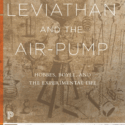
On Monday 12 May 2025, the Science Museum and UCL’s Department of Science and Technology Studies hosted Leviathan and After, a celebration of the fortieth anniversary of Steven Shapin and Simon Schaffer’s Leviathan and the Air Pump: Hobbes, Boyle, and the Experimental Life (Princeton, 1985). Eight early career researchers presented their work at the Science Museum’s Dana Centre, together with an invited lecture from Dr Miriam Brusius. Shapin and Schaffer were both in attendance and the presentations made clear that many of the themes, questions and approaches they raised back in 1985 continue to resonate with historians of science today.
Why is Leviathan and the Air-Pump considered so important? The heart of Leviathan was a claim that ‘solutions to the problem of knowledge are solutions to the problem of social order’. In dialogue with the Sociology of Scientific Knowledge (SSK), Shapin and Schaffer set out to move beyond the idea that science and society are separate spheres influencing one another to show that any knowledge-making enterprise demands a form of social organisation such that science must necessarily always be ‘social’. The question is not whether science is ‘influenced’ by society but what form should a simultaneously social and epistemological order take? Thomas Hobbes and Robert Boyle both had answers to this question but differed radically in their solutions, the basis of a dispute that Leviathan so eloquently analysed. While Hobbes reckoned an unassailable rationalism would secure science and social order in the future, Boyle insisted an order of assent based on natural facts collectively witnessed could achieve the same. Leviathan invited historians to recognise the politics in science and the science in politics.
To judge by the Dana Centre presentations, researchers continue to explore this relationship but take it into new territories, eras and cultures. Leviathan initially secured the place of seventeenth-century England as a critical site for making sense of modern science, but subsequent scholarship, evidenced in the conference presentations, greatly extended this geographical and temporal scope to diverse places and different scales, often reaching beyond Europe. Conference presentations considered sites ranging from Assam (Shreya Khaund) to Switzerland (Annabella Zamora) and included perspectives on national, global and imperial contexts (Alexander Stoeger). Leviathan also insisted that the settings of science – the spaces where knowledge is made and circulates – are critical constituents in the social and epistemological orders under analysis. Shapin and Schaffer drew attention to institutional sites like the Royal Society, processes of circulation and the construction of boundaries between ‘science’ and ‘society’. Spatial perspectives were equally in evidence in the conference presentations, again with a remarkable diversity, taking in early modern English law courts (Jonas Engelmann), art academies in the eighteenth century (Pierre Von-Ow), and museums (Stoeger). Davide Martino explored conflicts between scientific and local expertise in the shaping of supposedly natural environments in the early modern Atlantic world. Victoria Maguire-Rajpaul considered the governance and surveillance of smallholder farms growing cocoa, coffee and palm oil in the twenty-first century. If Hobbes and Boyle battled over the correct means to make sense of ‘Nature’, several presenters emphasised how today the ‘Environment’ is the scene of such conflicts, an artefact of both human and natural interventions, with disputes raging over how such interventions should be ordered (Martino, Maguire-Rajpaul, Khaund).
Shapin and Schaffer were able to access the politics of experiment by focusing on a controversy to show what was at stake in different epistemologies in seventeenth-century England. As disputants, Hobbes and Boyle were keen to point out the social, political and epistemic implications of their adversary’s position, something Shapin and Schaffer could identify without having to impute such connections. Conference presenters showed the continuing value of studying controversy, taking the approach into new fields and disciplines. Anin Luo examined debates on immunology in the 1950s between figures such as Peter Medawar and Milan Hašek, making apparent the distinctive laboratory cultures and socialist and liberal political orders present in competing visions of the nature of embryonic immunity. Pierre Von-Ow took us to eighteenth-century England, where debates raged over the proper rules for making art. Superficially esoteric rules carried with them competing visions of artistic production and social order that critics were quick to identify and condemn. William Hogarth correlated an enthusiasm for precision and rule-following with pretentions to organise art through an academic system that he supposed amounted to authoritarianism. Part of the power of Leviathan was to reveal the unfamiliar dimensions of familiar ideas, a strength echoed in these presentations making evident the politics of biological, artistic and other practices.
Material culture was another resonant theme of Leviathan. Shapin and Schaffer placed a scientific instrument – Boyle’s air-pump – at the centre of their account and brought out the importance of studying instruments, not just theories, in the history of science. The significance of working on what is now called ‘material culture’ in science only grew in succeeding decades, and again, objects and instruments provided a focus for a number of the conference presentations. Alexander Stoeger drew attention to the ways that museum artefacts and architecture were mobilised to secure Dutch epistemic and imperial identities in the new Rijksmuseum of Amsterdam in the nineteenth century. Annabelle Zamora considered the extraordinary labours entailed in legitimising a twenty-first-century scientific instrument, namely the particle accelerator at CERN in Switzerland. Just as Boyle needed to navigate a tense political landscape in Restoration England to promote the air-pump as a credible means to make natural knowledge, so the proprietors of CERN had to ensure the legitimacy of their instrument through a careful management of political, public and scientific actors and audiences.
Museums have become another critical focus for histories of scientific material culture. Mirjam Brusius, invited to speak to the conference, gave a provocative lecture on the present state of museum collections, archives and the ‘social materiality of science’. Brusius called into question many of the practices of collecting, storage and exhibition that surround material artefacts associated with the history of science, from the ‘Amazonization’ of museum storage, reducing staff and automating processes, to questions around museums versus the environment as the best place to store objects. Given the imperial legacy of modern museums and the safe existence of many artefacts for aeons under the ground, might some objects be better off reburied? Is soil a future museum? Brusius’s powerful challenges evoked the radical questioning that Leviathan insisted upon when it first appeared.
In the 1980s Leviathan constituted a crisis in the history of science, understood by some as an historiographical disaster and others as a profoundly exciting opportunity. The book marked a moment when a new sociologically-informed approach to epistemology challenged an older view that while many things might be influenced by society and politics, science was not one of them. The book itself is the story of a crisis, the urgency of Hobbes and Boyle’s debate generated by their attempts to establish a lasting peace and stable social order in the aftermath of England’s violent Civil War. In the present moment, when historians may feel in the grip of multiple environmental, political and social crises around the world, Leviathan reminds us of the importance in such moments of making sense of the connection between knowledge and social order. The conference presenters demonstrated in an extraordinary variety of ways how such an understanding may be achieved.
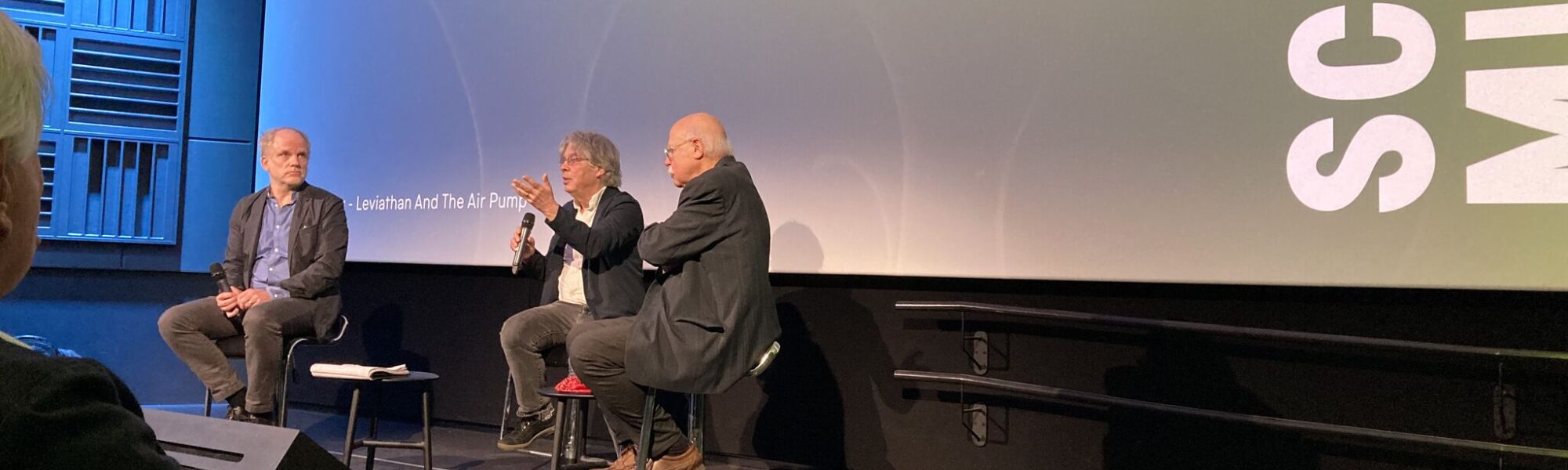
The Science Museum workshop concluded with a plenary discussion of Leviathan and its legacies between Steven Shapin, Simon Schaffer and Professor John Tresch of the Warburg Institute. Asked about the academic contexts that led to Leviathan, Shapin began by reminding the audience of a central question in the book regarding what was then known as the ‘internalism/externalism debate’. Rather than insist that the sciences proceed solely on the basis of prior scientific developments (internalism) or that the sciences are influenced by ‘social factors’ (externalism), Shapin and Schaffer argued that it was the boundary between the two, and how it was made, that should be of interest to historians. One should not study ‘silos’ but interactions, exploring the stakes in controversies and disputes like the one between Hobbes and Boyle. This position, and Leviathan’s arguments more generally, owed much to the field of the Sociology of Scientific Knowledge (SSK), and Tresch pointed out how Leviathan effectively black-boxed many SSK arguments so that they became a common part of the historian of science’s toolkit subsequently.
The discussion considered long-term trends raised by the book. Shapin thought that an important question raised by Leviathan concerns ‘who has the right to be heard?’ Historians may add new persons to the ‘cast list’ of significant figures in the history of science, but this is not enough. Understanding why they were silenced in the first place is equally important. What are the conditions of possibility in the sciences for some people to be heard and others to be silenced? If we take seriously what is normally silenced, how might this reveal questions and experiences that we might not otherwise encounter? It is notable that since the 1980s there has been a flourishing of histories recovering the voices of diverse actors who shaped the sciences in practices and disciplines previously ignored.
As the earlier presentations demonstrate, another long-term trend that Leviathan contributed to concerns the geography of knowledge or the spatial dimensions of science. Shapin elaborated in this point noting how Leviathan raised the question: how is it that somewhere very specific and apparently unique and special, like a scientific laboratory, is also supposed to be the place that tells you about the nature of the whole universe? How can one place apparently stand for all places? This is the problem of representation. A government or parliament or home is a place where there are people who apparently stand for everybody. Yet it is simultaneously extremely difficult to be one of those representatives – not everybody can do it. How does this come to be the case and what is its significance? Leviathan asks us to consider the nature of representation. Hence, how do objects come to represent ‘Nature’? How is it that people take things that are artificial, like experimental situations or instruments and their effects, and make them stand for or represent nature? As Schaffer underlined, a key concern for Hobbes – and for the authors of Leviathan and the Air-Pump – was the way in which people create things that they then view as enacting autonomous powers over them. People generate institutions or concepts or artefacts and then somehow forget their own artifice and come to believe in the character of these things as natural, given or essential. What is this process and what are its consequences for epistemology and politics?
The discussion turned finally to the relationship between Leviathan and the work of the late Bruno Latour, whose book We Have Never Been Modern (1991) made much of Shapin and Schaffer’s arguments. At the Science Museum Shapin and Schaffer were cautious about Latour’s later, anxious claim that the methodological scepticism of SSK (which invites us not to take anything science says for granted as true in order to recognise the social nature of truth) contributed to undermining the authority of the sciences. Shapin was unconvinced – it seems unlikely, he supposed, that Donald Trump is reading works on SSK in bed at night! Rather the present danger today is not that there is a powerful critique of science in operation but that in many cases there is no concern for science at all. Powerful figures simply dismiss the views of scientific experts in their policy deliberations. Even if SSK was highly critical of claims about scientific truth, criticism is a form of flattery – it shows you care. Many powers in the world today appear to simply not care.
In the question-and-answer session that concluded the day, former Science Museum curator Robert Bud called attention to the fact that the hall where Tresch, Shapin and Schaffer were having their conversation was the location of Nikolai Bukharin, Boris Hessen and the Soviet delegation’s presentations to the Second International Congress of the History of Science and Technology in London in 1931. This is a famous moment in the history of science, because the Marxists’ novel approach to history proved highly influential in the field. It seems Shapin and Schaffer’s work exerts a similar influence in the present, judging from the ingenious and rich variety of papers and conversations that we were treated to throughout the day.
Tags
Author

Media in article