Museum-led repatriation of Second World War human remains: the case of Preben Holger Larsen
Article DOI: https://dx.doi.org/10.15180/252407
Abstract
In 2022, the ashes of Preben Holger Larsen were repatriated to Denmark, and interred at the Mindelunden Memorial Park on the outskirts of Copenhagen. Larsen was a member of the Danish resistance to the Nazi occupation of Denmark during the Second World War, and for this was imprisoned at Neuengamme Concentration Camp in northern Germany, where he was killed in 1944. However, after the end of the war, Larsen was listed on a Memorial at Mindelunden for those Danish freedom fighters whose remains had never been found.
Larsen’s cremated remains had, in fact, been taken from Neuengamme by Frederick Murgatroyd, a Lieutenant Colonel in the British Army Medical Corps, and brought back to the UK. After Murgatroyd’s death in the 1950s, the urn containing Larsen’s ashes, together with twenty photographs from Neuengamme and Bergen-Belsen, was given to the former Wellcome Museum of Medical Science in London, and in 1982, loaned to the Science Museum with the rest of the Wellcome museum collection.
In this article, we explore how Larsen’s remains came to be in a museum collection, how they were rediscovered and their identity confirmed, and the efforts towards their repatriation. The ethical collections management of human remains in museums is a complex and evolving field, and repatriation is receiving significant attention across the sector. This is an unusual case, but one with important lessons in collections management, archival research, public access to museum documentation, and the review of human remains in museum collections.
Content advisory:
This paper contains frank discussions about human remains in museums, and in relation to Nazi atrocities during the Second World War, concentration camps, and the Holocaust. This article contains a photograph of an urn, but it does not contain any photographs of human remains.
Keywords
Collections management, Human remains, Mindelunden Memorial Park, Museum documentation, Preben Holger Larsen, Repatriation
Introduction
https://dx.doi.org/10.15180/On 29 August 2022, the ashes of Preben Holger Larsen were interred at Mindelunden, a memorial park on the outskirts of Copenhagen. The date chosen for the ceremony is heavy with significance for Denmark in general, and for Larsen in particular. Larsen’s internment happened 79 years to the day since the co-operating Danish government ceded control to the Nazis who imposed a state of military emergency in 1943. On this same day, the Germans also attacked the Danish army training ground at Ryvangen, subsequently turning it into a place of execution and burial for members of the Danish resistance.
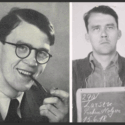
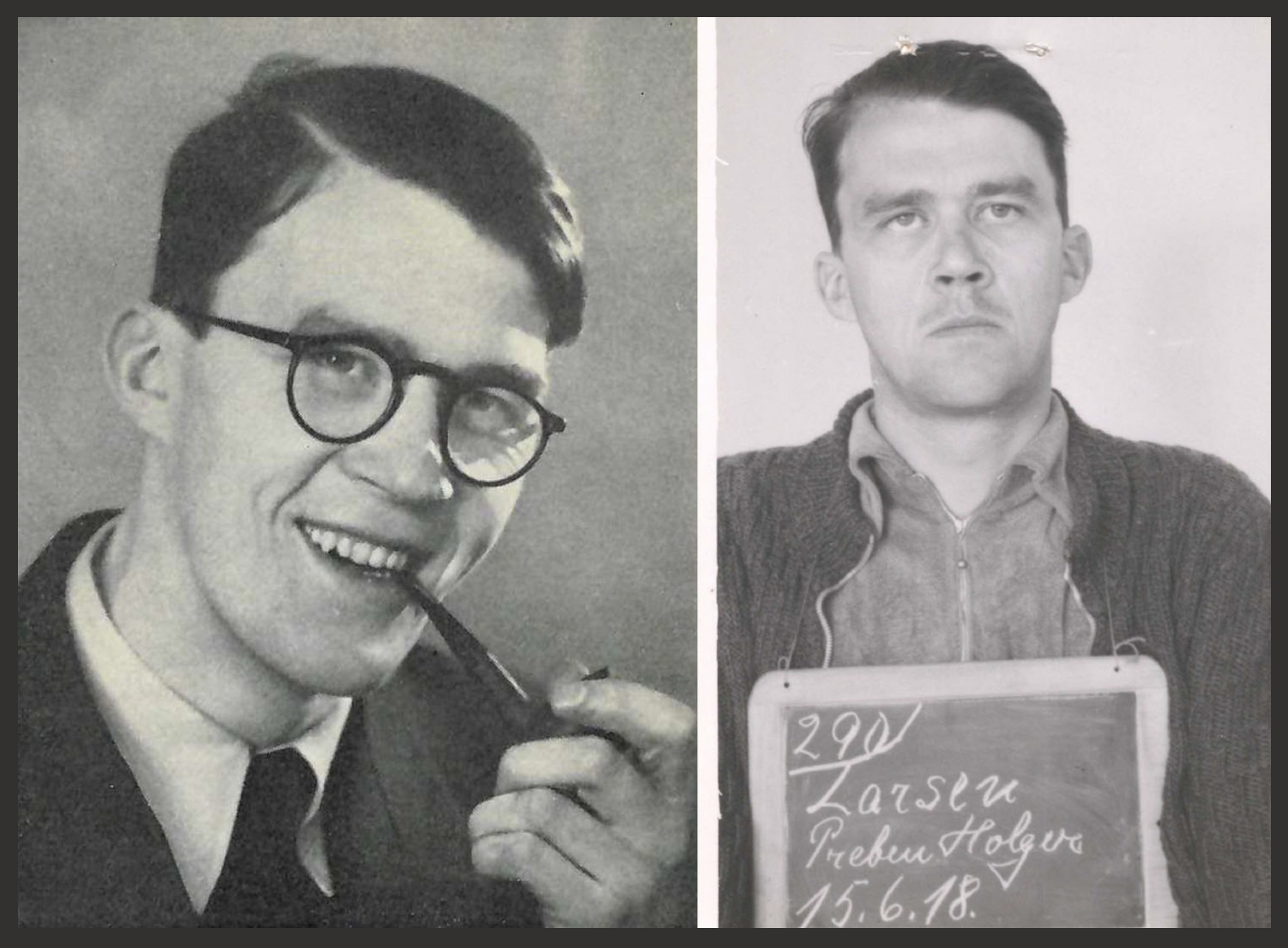
Following the collapse of the Danish government, Preben Holger Larsen, a 25-year-old aspiring artist working as a toolmaker at a local factory, quickly became involved with the illegal press, helping to establish and edit a new magazine titled 29 August.
Larsen was arrested, alongside three colleagues, by the Gestapo in May 1944 at the printing office for another outlawed publication, Fri Presse, with which 29 August had merged in March of that year.[2] He was held initially in prison camps within Denmark, at Horserød and then Frøslev, but in mid-September 1944 Larsen was transported across the border and taken to Neuengamme, close to Hamburg in Germany. He was moved on to the Porta Westfalica sub-camp, where prisoners provided forced labour for the construction of a vast underground tunnel system to protect German aircraft manufacturing and other industrial activity from Allied aerial attack.
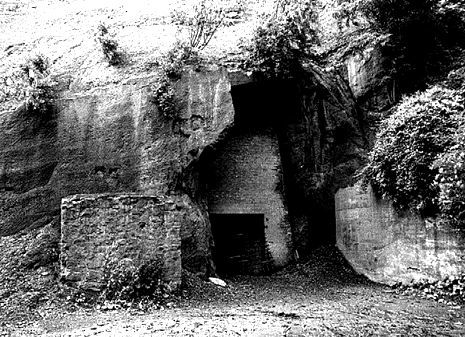
Larsen survived less than three months at Neuengamme, and died on 22 November 1944.[3] His cause of death was given as heart failure and pneumonia, though these records were known to be unreliable, and often fabricated to conceal mistreatment of prisoners (Lambertz, 2020).
After the end of the war, Mindelunden was inaugurated as a memorial to the Danish resistance, again on 29 August, with a state funeral marking the reburial of 106 resistance fighters who had died during the war.
A separate area of the memorial park was reserved for members of the resistance who died in German concentration camps, whilst plaques on a memorial wall named 151 people known to have lost their lives resisting Nazi rule whose remains had never been found. 31 Danish resistance fighters who had died in concentration camps were identified between 1945 and 1947; their remains were repatriated and reinterred at Mindelunden in 1947. The park was then landscaped and officially completed in 1950: no further interments or burials were anticipated as the park commemorates only those resistance fighters who died during the Second World War.
Over seventy years later, an enquiry about a mistake in a museum catalogue entry in the United Kingdom led to the identification of Preben Holger Larsen’s remains. Following research in archives, corporate records, with a forensic expert and a number of museum professionals, his remains were returned to Denmark. This article explains how this process unfolded.
Uniquely, the name of Preben Holger Larsen now appears on both the memorial wall for the missing dead and on a grave in the concentration camps section of the Mindelunden memorial. Almost 78 years had elapsed between Larsen’s death at KZ (Konzentrationslager) Neuengamme in 1944 and his eventual laying to rest at Mindelunden in 2022.
The importance of sharing bad data: collections information and repatriation
Museum records are often taken to be neutral or privileged sources of knowledge, but they are both contextual and historical, as are many bureaucratic practices. As many practitioners, experts, and scholars know, to return or de-accession objects, one must investigate the documentation that was collected with the object or that was created by the institution. Repatriation is a complex process of relationship building, advocacy, activism, fundraising, and more. It also requires a lot of ‘paper’ work, digging into archives and museum catalogues to establish claims of ownership and ‘authenticity’.
Turner, 2023: 4
Repatriation and restitution of museum objects, including human remains, is a live and evolving issue in the cultural sector around the world. Although writing here about the importance of ‘paperwork’ in repatriating museum objects which form part of the legacies of colonialism, Hannah Turner’s point holds true for the remains of Preben Larsen. The journey towards identification of his remains, and his eventual repatriation, began with the correction of an error in a publicly-available catalogue record, and proceeded through the records of the Science Museum Group (SMG) and the Wellcome museum collection, incorporating many other archives and repositories along the way.
The Science Museum Group’s Collections Online website draws content from catalogue records in Mimsy XG, the Collections Management system used by the Group to manage its object collections. As of 2025, it publishes over half a million records of objects in the care of the Science Museum Group, including over 100,000 objects in the Wellcome museum collection. This includes several thousand records of objects containing human remains. As of 2025, SMG’s Collections Online receives over three million visits per year – part of a growing global trend for museums to make their collections documentation digitally accessible.
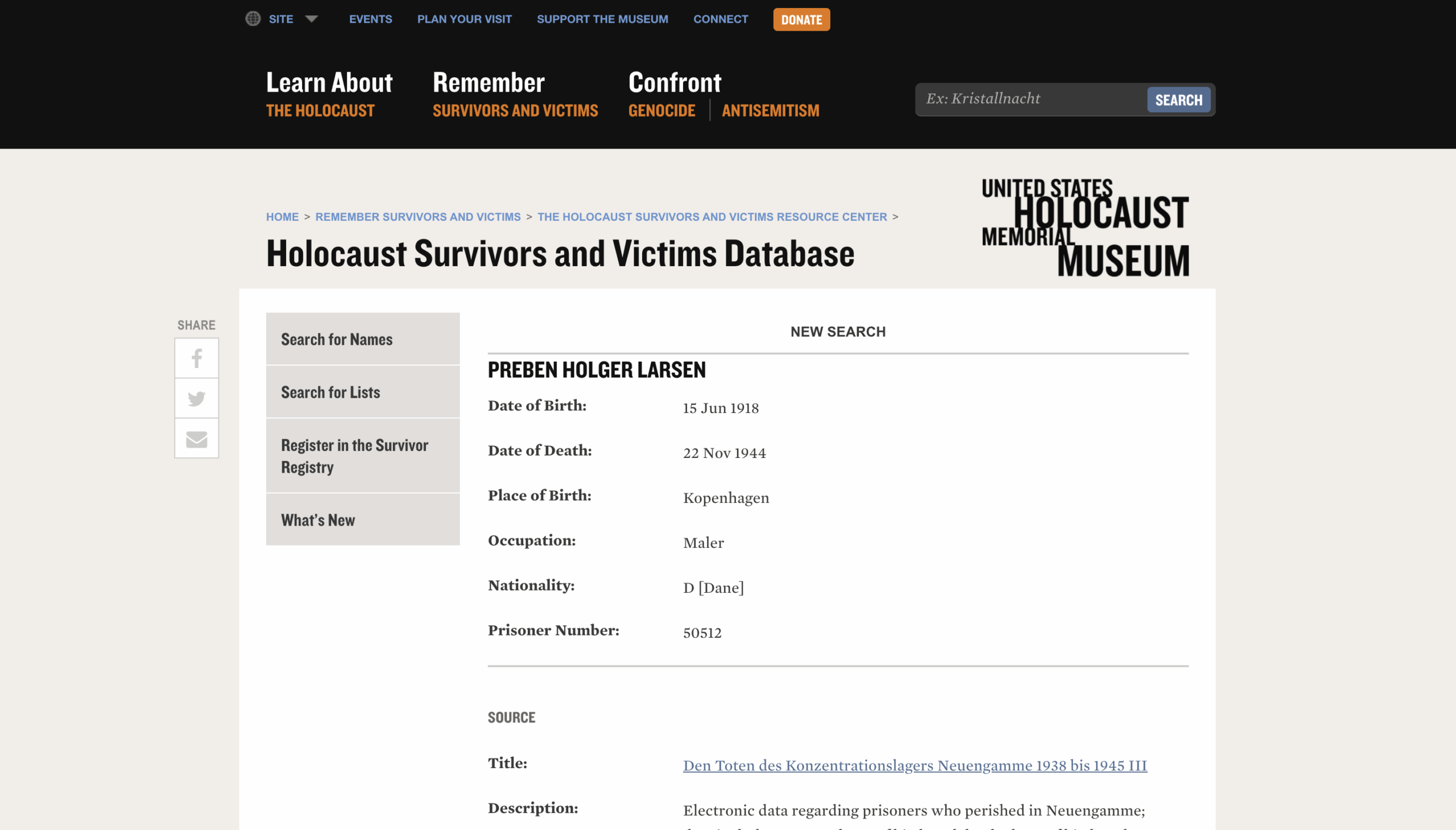
A member of staff at Wellcome Collection, Visitor Experience Manager Steve Britt, was the first person to notice a discrepancy in the Collections Online record for Larsen’s remains. Britt working for Wellcome was a coincidence – he was doing research separate to his day job, and using a publicly available database, which is used by thousands of visitors around the world every day for a wide variety of purposes. He noticed an error in an online record, which read:
Funerary urn, plaster, containing ashes of Prebendary H. Larsen (1918–1944), cremated at Hamburg, 25 Nov 1944, but reputedly from Belsen, Germany, 1944.[4]
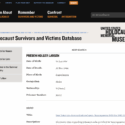
A Prebendary (or Prebend) is a specific clergy role, usually within a cathedral, and linked to a stipend from church land. Concerned by the record also mentioning a purported connection to ‘Belsen camp’, Britt searched the Holocaust Survivors and Victims database at the United States Holocaust Museum[5] – one of many more publicly available museum databases – and was able to find Preben Holger Larsen, a member of the Danish resistance who died at Neuengamme concentration camp in November 1944. Britt emailed colleagues at the Science Museum, and an investigation into the record began.
To a general audience, it may seem odd that such a significant error in cataloguing Preben Larsen’s remains was made. Museum catalogues and the information they contain are often regarded by audiences as objective and factual. However, this is not now, nor has it ever been, the case. Museum catalogues are often based on historic documentation, which puts contemporary collections information much closer to its historical predecessors than audiences might imagine when reading a web page. It is very common to find that the origins of a catalogue record, and its online counterpart, are more than a century old.
Documentation media have not been subjected to the same criticism directed at visual media like photography or film. Yet, the collecting list, the paper register, and the card catalogue were foundational media technologies in the development of the anthropological discipline in the mid-nineteenth and twentieth centuries, and they created the conditions of possibility for contemporary digital databases.
Turner, 2021: 5
A number of scholars have interrogated the archive as a concept, and some of this recent research is applicable to the museum collection and its documentation. Collections of archives and museums are often highly political, biased sources which are created and maintained by people and institutions with agendas, whether conscious or not (for example, Burton, 2005; Ogborn, 2010). They are a product of the people who collect and create them, and the things they do not contain or document are often as instructive as the things that they do. This important historical context is often transferred through time; records created while collecting objects even centuries ago often remain in some form in the modern digital database, without much interrogation. This is equally true of cataloguing errors and omissions.
Further to the historical nature of museum documentation and the influences it is subject to, errors in cataloguing are common because of the scale of the information held – the Science Museum Group holds over 7.3 million items in its care, including library, archive and object collections, as well as their supporting technical information. Most museums – many of which have large collections and long histories of collecting – have significant collections information backlogs. This issue has been exacerbated by continuing funding pressures in the cultural sector.
Understaffing…and a lack of funding…in the area of collections are real barriers to undertaking collections work. Limited resources are focused mainly on public-facing activities, which means that activities like digitisation, collections reviews and new acquisitions take a back seat.
Art Fund Directors Survey 2024: 24
The Art Fund Directors Survey 2024 also states that between 2022 and 2024, there was a significant drop in museums intending to carry out a review of their collections. This is despite the risk this poses – a series of highly-publicised thefts at the British Museum was due, in part, to poor collections documentation. An independent review of collections security at the British Museum recommended that ‘unregistered or inadequately registered objects’ in the collection need to be fully documented to prevent future thefts (Boardman, D’Orsi and Karet, 2023). Further to the risk of theft, there is also a fundamental risk attached to undocumented – and under-documented – museum collections. Without proper research or recording of collections information, museums cannot fully understand the objects in their care. As a result, they are carrying risks associated with provenance, rights, ownership, material condition, and hazards which cannot be managed.
Despite the continuing lack of funding and resourcing to address them, the heritage sector is finding ways to come to terms with the endemic issue of large collections information backlogs. For example, with the publication of a new sector standard for collections management, Spectrum 5.0, came the inclusion of a new procedure in this standard, Documentation Planning. Developed and published in 2022, it supports UK museums in recognising areas for improvement in their documentation (Spectrum 5.0, Collections Trust). Further updated in September 2022 to Spectrum 5.1, this standard now reflects a change in emphasis on cataloguing, which includes:
Stressing that cataloguing is an ongoing process that builds on inventory information, dispelling the concept of an ‘ideal’ or ‘finished’ catalogue record.
As new information comes to light through research, so catalogue information should be updated and improved; but in acknowledging that a ‘finished’ record does not exist, museums must also acknowledge that in an age of searchable collections being widely available online, they are publishing incomplete and often incorrect records.
Museums need to be comfortable with this – not only do external researchers and digital audiences often hold expertise that can be useful to museums, but working collaboratively to share expertise is a valid form of engagement that can result in positive outcomes for all parties. This kind of work takes time to research, verify and respond to even for the most straightforward of feedback, but when it is related to objects with a contested or difficult history, this becomes a highly complex process. However, the potential improvement in knowledge and approach is vital. Dan Hicks has argued that sharing of knowledge and collaboration through repatriation is, in fact, an essential part of restitution itself, and of mutual benefit:
Where an object has been looted, and a community asks for it back, western museums have a duty actively to make a return, both of the physical object and additionally of other sharing of knowledge, resource, connections, and platform. Every return offers an opportunity to fulfil the museum curator’s principal job: to understand their collections better.
Hicks, 2020: 239
Even though the information available on the Science Museum Group’s Collection Online website was incorrect, it was enough to identify a missing victim of Nazi atrocities, and for SMG and Wellcome Collection to begin the process of identifying Preben Holger Larsen.
Context: The Science Museum Group and the Wellcome Museum Collection
Although stored by the Science Museum Group, Preben Larsen’s remains were a part of a loan collection legally known as ‘Sir Henry Wellcome’s Museum Collection’ (hereafter the Wellcome museum collection), on loan from Wellcome Collection, a museum and library based on Euston Road in London, and a part of the Wellcome Trust.[6] The Science Museum and the Wellcome Collection have a long, intertwined history with the collection and its use. How Larsen’s remains came to be in this collection is related to his eventual identification, so it is important to understand the context of the collection itself.
Sir Henry Wellcome (1853–1936) was a pharmaceutical entrepreneur at the turn of the twentieth century, having been a founder of Burroughs Wellcome & Company. At his death, he had amassed a significant fortune, which was used to endow the Wellcome Trust, now one of the biggest biomedical research charities in the world. He had also amassed a significant collection of objects related to health and medicine (in the broadest possible definition) from around the world.
Following Wellcome’s death and some decades of reshaping of the Wellcome museum collection, the Wellcome Trust increasingly turned its focus to establishing university departments and research programmes (Eveleigh and Horry, 2025). The future of the museum collection was uncertain, in part due to the space required to store it – the Wellcome museum collection comprises around 120,000 objects today. Following a period of consultation and agreement that public engagement with the collection should be prioritised, the Trustees of Wellcome agreed in 1972 that the remaining collection should be transferred to the Science Museum, where it would be seen by a much larger audience (Rooney, 2010: 171). The Wellcome Museum of the History of Medicine opened on the fourth and fifth floors of the Science Museum in 1980–81 (Rooney, 2010: 173), and the ‘reserve’ collection was one of the first collections to be moved into the Science Museum stores in Blythe House in the 1980s (Liffen, 2010: 288).
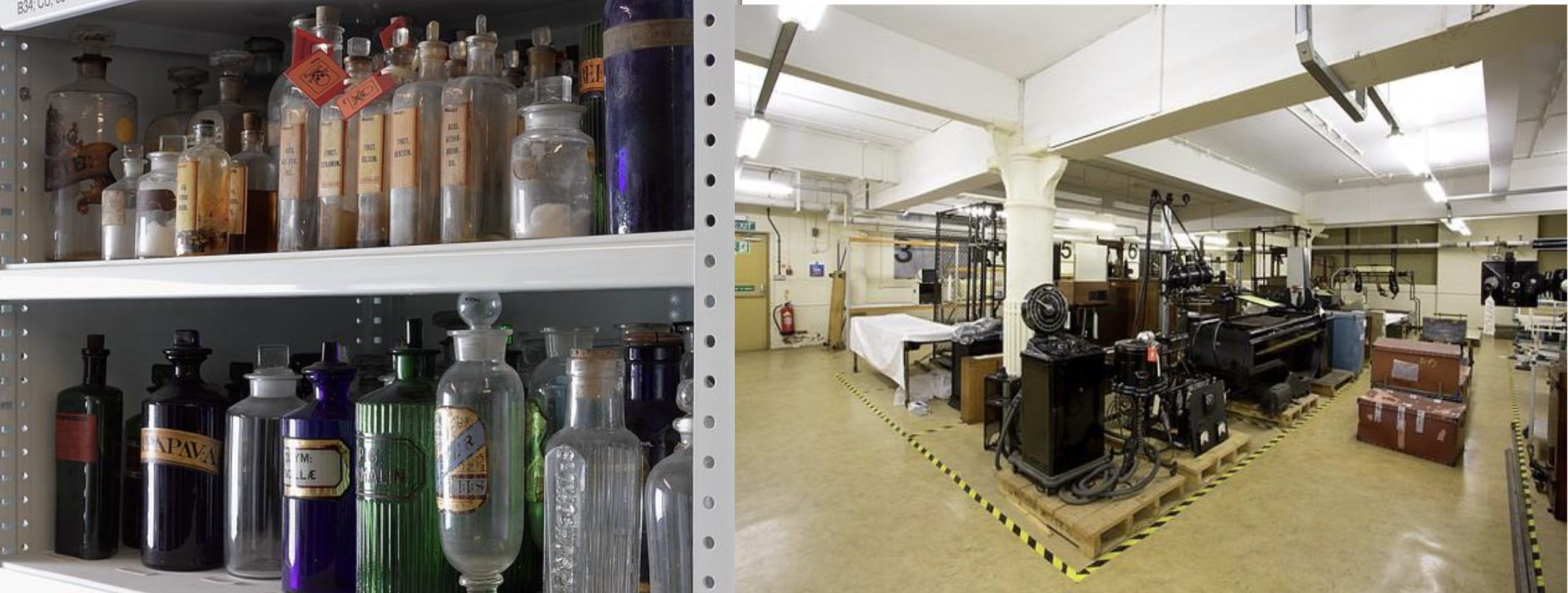
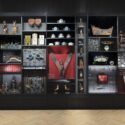
In 2019, Medicine: The Wellcome Galleries opened at the Science Museum in London, replacing the former Wellcome history of medicine galleries which had occupied the top two floors of the Science Museum since the 1980s.[7]
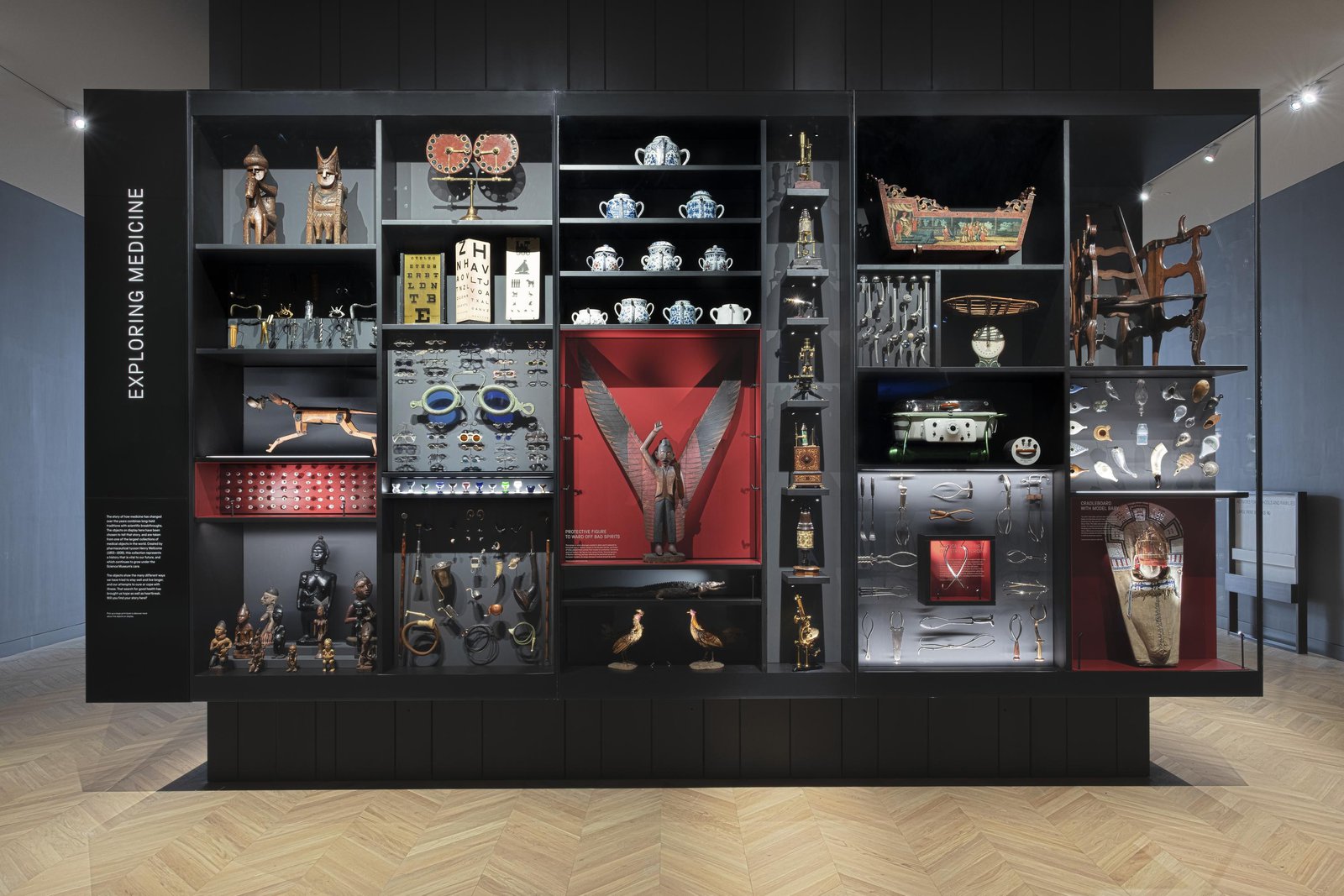
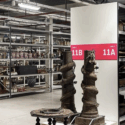
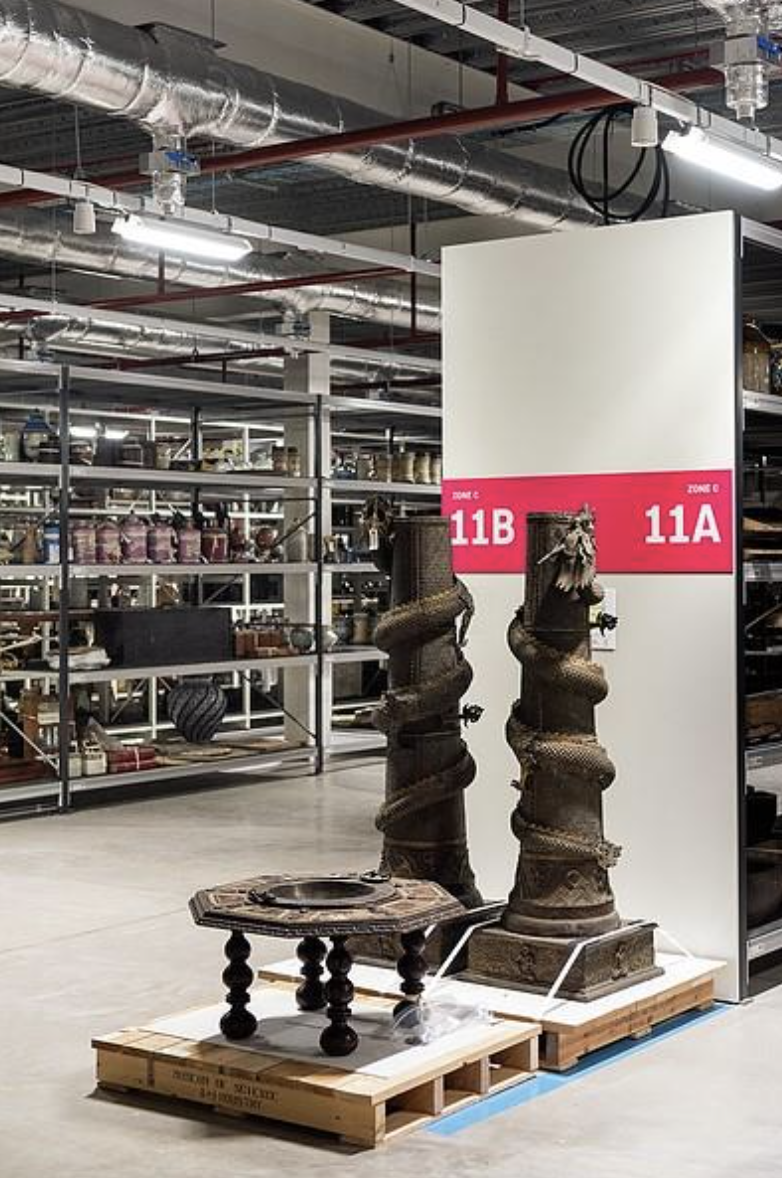
Until 2021, the Science Museum kept the majority of the Wellcome museum collection objects at Blythe House, a store in West London shared with the V&A and the British Museum, in the converted former Post Office Savings Bank building. However, in 2015 the British Government announced that they were selling Blythe House, and that the three national museums would have to move out (Humphreys and Percival, 2023). Since 1979, the Science Museum has owned a former RAF Airfield in Wroughton, Wiltshire, where for some time it has stored its Library and Archive collections, and its large object collection, made up primarily of vehicles and industrial technology. Now known as the Science and Innovation Park, the site at Wroughton is home to the National Collections Centre, which includes a new, purpose-built storage facility, the Hawking Building.
The vast majority of the Wellcome museum collection is now stored in the Hawking Building, alongside the Science Museum’s own medical collection. When considered together, both the Science Museum medical collections and the Wellcome museum collection account for around 180,000 objects spanning thousands of years of history and is one of the most significant medical museum collections in the world. The Science Museum is responsible for the day-to-day curation and collections management of both medical collections, working closely with the museum team at Wellcome Collection on various projects.
Collections information, archival research and inconsistency in the historical record
Although part of the Wellcome museum collection, Preben Larsen’s remains were an outlier in time; collecting had slowed significantly after Henry Wellcome’s death in 1936. Preben Larsen’s remains had, however, been donated to the Wellcome museum collection during the 1950s. As such, there was considerable investigative work needed to determine how, when and why an urn purportedly containing the remains of a Danish victim of the Nazi regime had been brought to London and ended up in Blythe House.
Once it had been determined that the urn was likely to contain the missing remains of Preben Larsen rather than a Prebendary, Science Museum curators began to follow up through the paper records that the Museum holds directly relating to its collections. In this case, the urn and the remains they contained had a ‘Technical File’ – the pink Technical (or T/) files containing information relating to the acquisition and provenance of objects in the collection. These can vary significantly: some are almost empty, containing very basic information, while others contain manuals, photographs, technical drawings, legal agreements, personal correspondence and more.
T/A681112, the file referring to the urn and Larsen’s remains, contained a letter from Mrs Mabel Murgatroyd to C J Hackett, a former director of the Wellcome Museum of Medical Science between 1945 and 1954. In it, she offered the urn and its contents, as well as 20 photographs, to the Museum. Mabel Murgatroyd stated in this letter that her husband, Lieutenant Colonel Frederick Murgatroyd, had collected the urn and its contents at Bergen-Belsen concentration camp, and that the urn itself did not contain the remains of one person, but many; she stated that her husband had gathered the remains himself and put them into an urn he found there.[8] This may seem a bizarre action for Frederick Murgatroyd to have taken ‘to a modern reader’. However, the removal and memorialisation of anonymous human remains following the liberation of concentration camps and other sites of Nazi atrocities is known to have happened in a number of other cases (Dreyfus, 2015), including for the deliberate purpose of repatriation and memorialisation. There are several documented examples of this behaviour, such as the removal of human remains from Buchenwald by a British parliamentary delegation, which resulted in a repatriation in 2023 (Buchenwald Memorial, 2025).
The parallel museum documentation held at Wellcome Collection on Euston Road also referenced the urn and its contents. Steve Britt’s research had already located an entry in the Wellcome Historical Medical Museum register, dated 1967, recording the presentation of an ‘Urn of calcined bones from Belsen Concentration Camp, 1945. And 20 photographs’ by a ‘Mrs Murgatroyd’. Wellcome archive records relating to the 1975 loan agreement between Wellcome and the Science Museum confirmed this urn of an anonymous individual registered in 1967 was moved to the Science Museum in 1982, but there were still many gaps and inconsistencies. The 1967 Museum register entry was scrappily written and suspected to have been made retrospectively some years after the urn’s acquisition. The discrepancy between Larsen’s death at Neuengamme and the mention of Bergen-Belsen as the location in which Larsen’s body had been cremated was repeated in the register, most likely repeating the account of Mabel Murgatroyd.
Mabel Murgatroyd had also donated a selection of papers relating to her husband Frederick in 1953, which became a part of the Wellcome library collection. These are listed as the papers of Professor Frederick Murgatroyd, as he became at the University of London after his wartime service. These papers include a further four photographs ‘apparently taken in Germany during Murgatroyd’s war service’, and marked ‘Nauengamma’ [sic] on the reverse.[9]
Further to the letter, the 20 photographs contained in the technical file were also thoroughly examined at the Science Museum. Comparing the photographs against their captions, a number of well-documented sources relating to Bergen-Belsen Concentration Camp were used for verification. It was determined that while some of the images were almost certainly taken at Bergen-Belsen, some were very likely not – particularly those showing a crematorium.
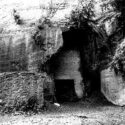
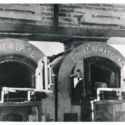
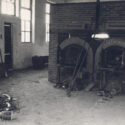
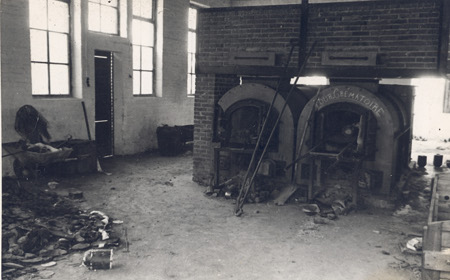
In particular, photographs 19 and 20 in the set showed furnaces in a crematorium. These images did not match any photographs of the Bergen-Belsen crematoria. However, they were a very close match for the crematorium at Neuengamme, based on an image taken by former Neuengamme prisoner Zdzisław Sokòł in May, 1945, showing distinctive features including the chalk writing in French on the arched entrance to the furnace, the white walls with red brick protrusions, and the pull-out fixtures with metal handles above the furnaces.
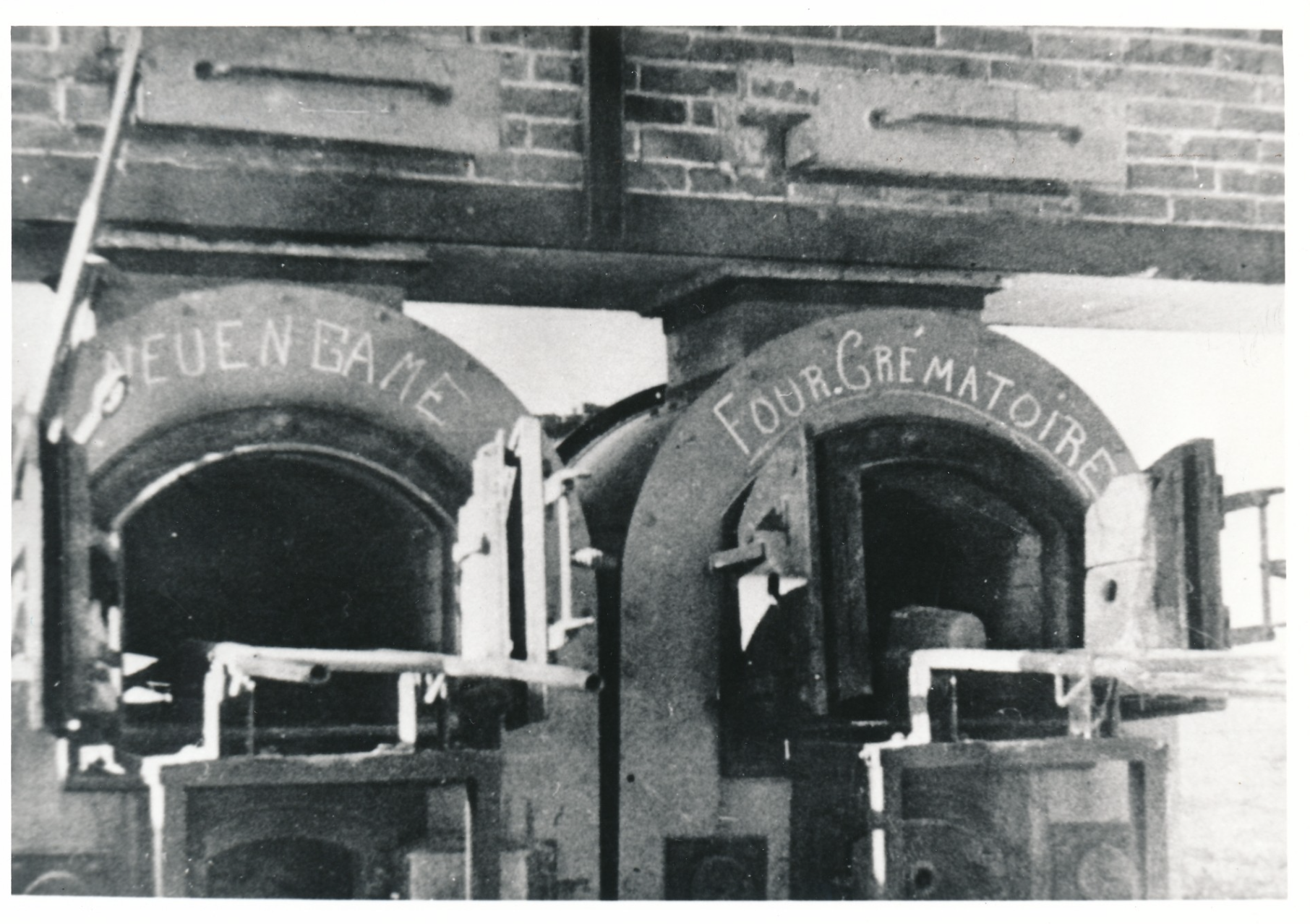
They also show what appear to be several urns of the same type as the urn containing Larsen’s remains, strewn on the floor in the foreground (black, bullet shaped cylinders – seen clearly in this image).
There was some further evidence from the letter that facts had become confused with the passage of time. The letter from Mabel Murgatroyd states that Belsen Camp was liberated in the first week of May 1945, that the enclosed 20 photos were of Bergen-Belsen, and specifically that the photographs were taken by her husband on 5 May 1945. In 18 photographs, there are a number of recognisable physical features of Bergen-Belsen, as well as images showing prisoners, both living and deceased. However, Bergen-Belsen was actually liberated on 15 April 1945 (Kemp, 1996). Torsten Jugl, Photo Archivist at The Wiener Holocaust Library in London also observes that most of the known pictorial evidence showing bodies lying on the ground or the excavation of mass graves at Bergen-Belsen dates to April 1945, and consequently would pre-date Murgatroyd’s visit to the camp. Furthermore, copies of at least 9 of these 20 photographs can be found in the Wiener Library in London, as well as in several other Holocaust related archives and libraries around the world, which suggests that Murgatroyd is unlikely to have been the photographer.
Neuengamme, however, was liberated during the first week of May 1945 (Stone, 2015), which aligns with Mabel Murgatroyd’s account of the date, if not the location. At the point when the British arrived in Neuengamme though, the camp had been largely evacuated, and the concentration camp system had collapsed into chaos, with forced evacuations or death marches, and destruction of records happening in multiple locations. From Neuengamme and its sub-camps, thousands of prisoners were transferred to other camps in April 1945, including to Bergen-Belsen, and some to prisoner ships such as the SS Cap Arcona, the SS Deutschland and the SS Thielbeck. These three ships were mistakenly bombed by the RAF on 3 May 1945, who believed they were carrying fleeing Nazis and military, when in fact the majority of their passengers were evacuated Neuengamme prisoners. The sinking of the SS Cap Arcona alone cost 5,000 lives, and around 7,000 former Neuengamme prisoners were lost in total (Long, 2017).
After unpicking all of these archival trails, it is beyond reasonable doubt that Lieutenant Colonel Frederick Murgatroyd was indeed at Neuengamme camp in May 1945, and this is most likely how and where he came into possession of the urn and the remains it contained. However, Preben Larsen had passed away in November of 1944, six months before the evacuation of Neuengamme and Murgatroyd’s arrival. His urn remained at Neuengamme, instead of being returned to his family. The ashes of political prisoners had been returned to their next of kin by the Nazis before the war, and to some extent it continued through the 1940s, though this became less certain. Often, urns that were returned to families across Europe from concentration camps were the first that the family would know of someone’s death. However, this was not the case with returning remains to Denmark. Although a number of urns containing remains of political prisoners were returned in 1945 via the Red Cross, generally urns were not released to Denmark. The Danish Ministry of Foreign Affairs would be notified of recent deaths of Danish citizens in the camps, but their ashes would not be made available for return.[10]
Combined with Mabel Murgatroyd’s account of her husband having filled the urn himself with unidentified ashes from a camp crematorium, this cast doubt as to the identity of the human remains, and the ability to connect them to a single individual. This was the next line of enquiry to resolve.
The material culture of human remains
Archival research and working with museum records, photographs and archival accounts is important – though as the above account shows, archives should not be taken at their word. When researching physical objects, however, written records can never provide the whole story. Reading the material culture of an object or collection is essential to understand its nature – the physical reality of the thing itself should never be discounted. Reading an object will often tell different and multiple stories, contradictory and supplementary to its paper trail.
After establishing that Mabel Murgatroyd’s captions for at least two of the images were incorrect, and that her account did not match with Frederick Murgatroyd’s record of service, there was a remit to further question the contents of the letter. Mabel Murgatroyd’s account suggested that these were the remains of many, likely unidentifiable victims, but the inscription on the urn itself suggested only Preben Larsen. Further, the metal lid on which the inscription was made had also been properly sealed on to the urn, as had other examples of this urn and lid type, suggesting it had been done in the crematorium rather than later by Frederick Murgatroyd.
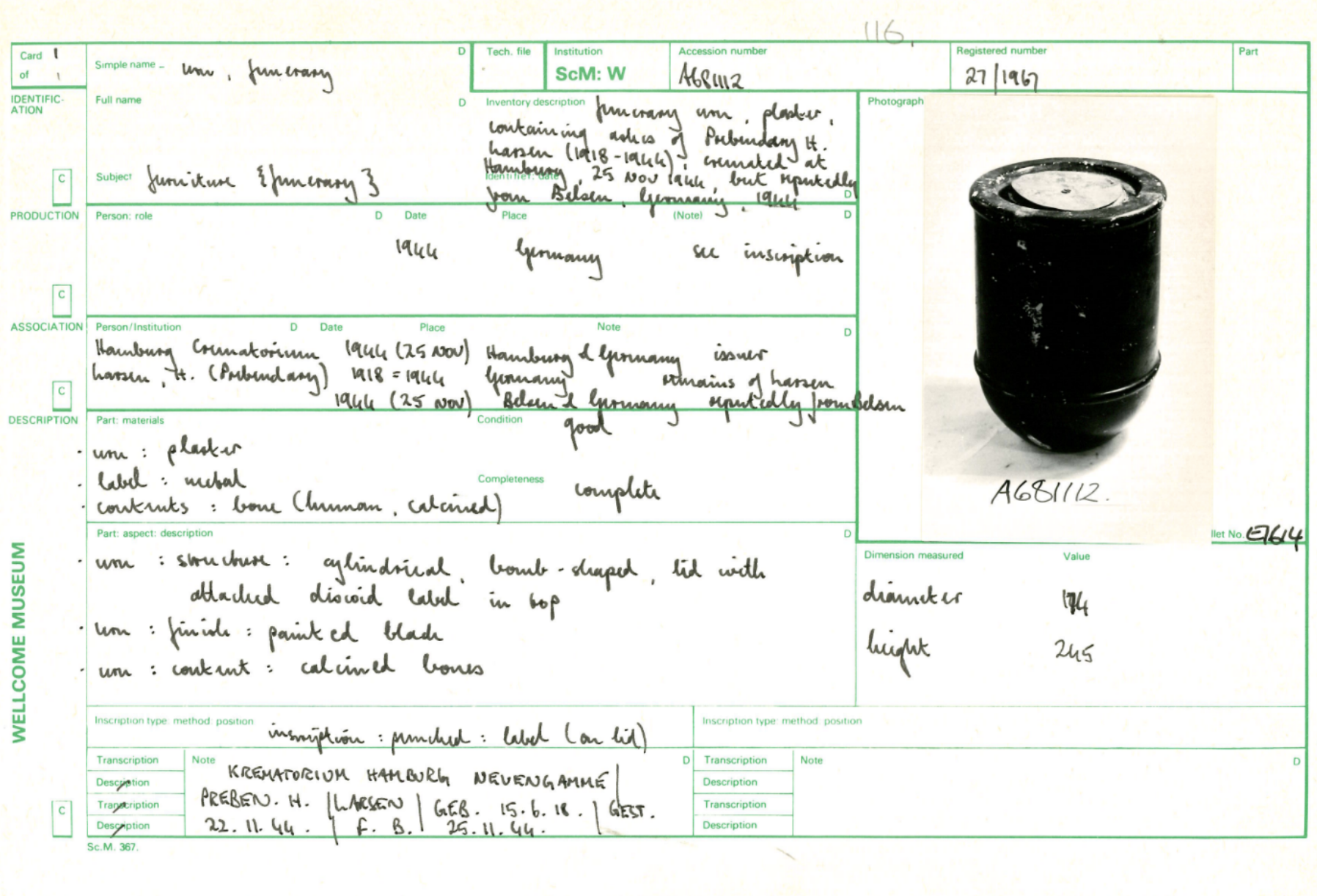
When the investigation began, the physical object in the Science Museum stores at Blythe House had been separated, for collections management purposes. The care of human remains in Welsh, English and Northern Irish museums is covered by the Human Tissue Act of 2004, and the Science Museum Group has a policy of storing all human remains objects separately from the general collection;[11] this often means that objects which contain human remains, but are not entirely human in nature, will be separated to conserve space.
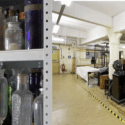
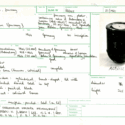
The urn from Neuengamme was made of a plaster material, painted black, and with a metal disc lid tightly attached. By 2019, the urn had deteriorated; the plaster was extremely dry and friable, and several cracks and holes had appeared. The cremated remains inside had been decanted by conservators into a lined plastic box as a result, and at the same time were removed to the dedicated human remains store at Blythe House. The urn itself remained in B68, one of the many storerooms containing Wellcome museum collection objects.
On the lid of the urn was the following inscription:
KREMATORIIUM HAMBURG NEUENGAMME
PREBEN H. LARSEN. GEB. 15.6.18. GEST 22.11.44. F.B. 25.11.44
Not only was this important to establish as much information about the remains as possible for accuracy, but the approach to a potential repatriation would be markedly different depending on the resulting identification. If the remains were found to be of more than one person, then it would be difficult to determine the appropriate cultural response. Neuengamme had a changing purpose and prisoner demographic over time. It was primarily used for political dissidents and prisoners of war, with the largest group being Soviet POWs, who numbered around 34,350. Before 1942 there were only 300–500 Jewish people at the camp, and they were removed to Auschwitz in 1942. However, in 1944, 13,000 Jews were moved to Neuengamme, this time coming from Auschwitz (United States Holocaust Memorial Museum, 2023b).
‘The Holocaust’ is often used as a blanket term to encompass all of the Nazi atrocities committed before and during the Second World War, especially relating to concentration camps and executions. However, the Holocaust is also defined by some as a more specific term, which refers primarily to the targeted genocide of Jewish people in Europe – sometimes also known as the Shoah, the Hebrew word for ‘catastrophe’. While many other groups were targeted by the Nazis, the reasons for and approaches to their persecution were significantly different (Centre for Holocaust Education, 2016), and they are not technically included in the term ‘holocaust’.
There is substantial guidance available for remains which are, or are suspected to be, of Jewish Holocaust victims. The Vienna Protocol (Rabbi Joseph Polak, 2018) was developed in response to the repeated discovery of human remains in medical collections, museums and archives which were (or were likely to be) of victims of Nazi atrocities. The Vienna Protocol also explicitly addresses the data arising from the unethical use of these human specimens, namely Edouard Pernkopf’s Topographical Anatomy of Man, which produced hugely detailed anatomical artworks which were widely used in medical training until the late twentieth century. These artworks were produced by Nazi artists, often incorporating Nazi symbols, and as a direct result of execution and murder of Nazi prisoners.
The Vienna Protocol sets out both what to do in the event of the discovery of remains, including mass graves and medical specimens, and the protocols for their mourning and burial or interment. For example, cremated remains are not normally allowed to be interred in Jewish cemeteries, as cremation is against Jewish tradition; but in the case of Holocaust victims, where cremation was against their will, they ‘must be’ buried in a Jewish cemetery (Polak, 2018: ‘The Ensuing Preamble to the Protocol’). Perhaps most importantly, the Vienna Protocol put the Jewish Community at the heart of the response to the continuing consequences of the Holocaust and emphasises the importance of identification of victims wherever possible.
Although not an internationally agreed protocol, there is also a UK museum precedent for the treatment of unidentified human remains likely related to the Holocaust. In 2019, the unidentified ashes of five adults and one child who were killed at Auschwitz-Birkenau were laid to rest, having been held by the Imperial War Museum (IWM) for many years (Browne-Swinburne, 2019). Following a review of their collections relating to the Holocaust, the IWM decided it was not appropriate to keep these remains, which had been bequeathed to them in 1997 with other Holocaust-related items. A pathologist had analysed the remains in 2005 but had been unable to identify the individuals (Smith, 2019).
Following consultation with the Auschwitz-Birkenau State Museum and the Office of the Chief Rabbi, these remains were given to the United Synagogue for interment at Bushey Cemetery in Hertfordshire (Browne-Swinburne, 2019). While there were around 125,000 non-Jewish people murdered at Auschwitz, there were over 960,000 Jewish victims, the overwhelming majority (United States Holocaust Memorial Museum, 2023a). As the IWM had confirmed with the Auschwitz-Birkenau State Museum that the remains were likely to have come from there, it was a reasonable assumption that the remains were likely those of Jewish individuals. Non-Jewish community leaders were also in attendance at the interment, but it proceeded on the assumption that Jewish rites were appropriate (Browne-Swinburne, 2019).
The repatriation of remains to sites of reburial or reinterment of the victims of Nazism have provided an important focal point for grief and remembrance. Jean-Marc Dreyfus has written about the phenomenon of re-interring the ashes of many, often-unidentified victims as a part of the process of healing and political reconstruction immediately following the Second World War. Because so many people were never found, a new phenomenon arising from the scale of Nazi atrocities and the war as a whole, there was a significant international need to find ways to mourn and to honour the missing.
These transfers of ashes answered a particular need in the aftermath of the war. Through them, a certain form of commemoration took place, a policy towards the dead which was part of a wider approach to the treatment of bodies from the Second World War in the face of a new phenomenon: the absence of a great number of these bodies. The exchanges of experiences between various political and ideological movements and between different religious groups – often opposed to one another – show the extent to which these transfers of ashes were polysemous, even if they all responded to the same needs.
Dreyfus, 2015: 32
This kind of international, interfaith memorialisation serves an important purpose for the many who will never be identified. However, Dreyfus also points out that when assumptions are made in the case of unidentified remains, bodies are assigned a nationality, military rank or religion which will never have belonged to them in life. Their memorialisation can thus become part of a politicised process for the living. By contrast, identifying remains, (wherever possible), gives the opportunity for a person to remain an individual, and to be given the most appropriate rites.
If the remains in the urn at the Science Museum could be identified as Preben Larsen, it is known that he was not a Jewish victim of the Nazi regime, so a Jewish interment would be inappropriate. The fact that the urn came from Neuengamme, and had Preben Larsen’s name on its inscription, strongly suggested this. However, Mabel Murgatroyd’s written account suggested that the remains in the urn were of many unidentified people, not of one individual.
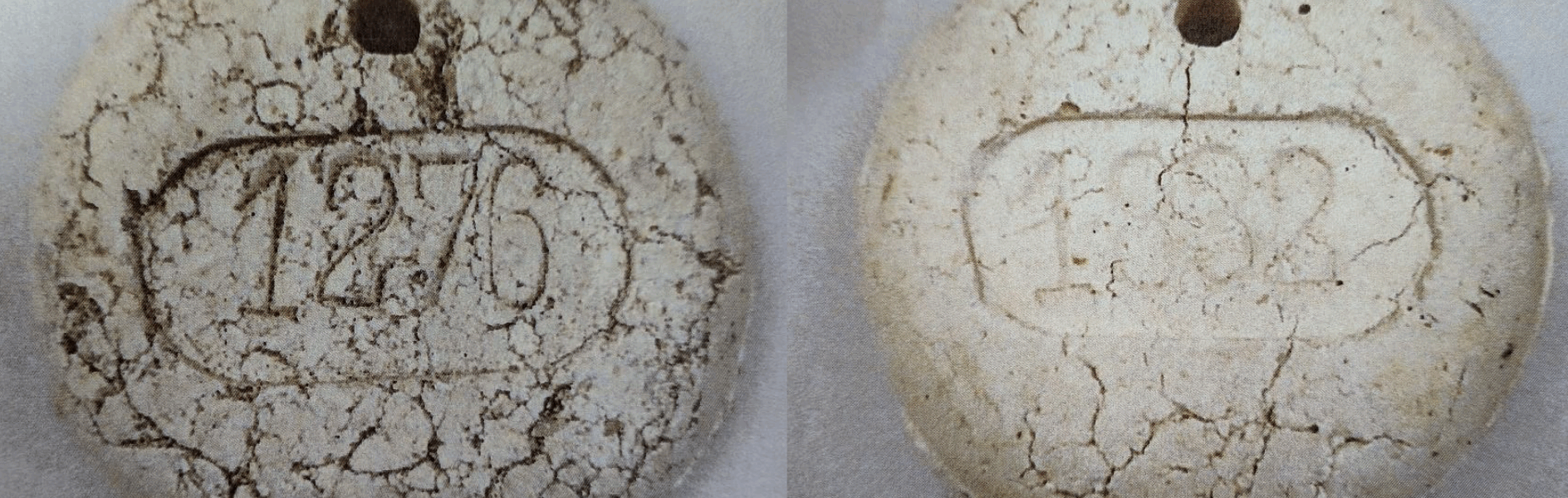
Another factor which required investigation was that, unusually, there were two plaster identification tags with the remains, showing the numbers ‘1832’ and ‘1276’. One numbered tag such as this was placed with each body to be able to identify remains after cremation, and were also used in Dachau and other camps, as well as at Neuengamme. However, they did not correspond to prisoner numbers (USHMM, 2025), and it has not been possible to link either of these to Preben Larsen or any other prisoner. But the fact that there were two also raised questions about how many individuals’ remains were present. Therefore, to eliminate reasonable doubt and determine the most appropriate approach, it had to be ascertained whether the urn contained the remains of one person, or several.

In January 2020, Keeper of Medicine Natasha McEnroe invited Forensic Anthropologist Dr Nicholas Márquez-Grant to visit Blythe House, to examine the remains in an attempt to determine whether the inscription on the urn (identifying Preben Holger Larsen) or the details in the letter by Mabel Murgatroyd (indicating the remains were not of one individual, but many) was more likely. Due to the heat used in the process of cremation, it was decided that the chances of success from DNA testing were very low, so Dr Márquez-Grant undertook a detailed physical examination as a less invasive option. He surveyed the remains in the Human Remains store with assistance from SMG staff, taking photographs and measurements. This took several hours to complete, and after analysing his results, Márquez-Grant provided the following summary:
Regarding what I saw at the museum on Friday 17th January I can confirm that the material I saw, weighing approximately 780g, is human bone. The bone was cremated (high temperature) and the bones present ranged from long bones to skull bones, hand and foot bones so from different anatomical regions. There is no reason to believe that there is more than one individual present as no repeated bones or different according to age and sex were present. The bones were of adult dimensions. Some limited observations would likely point to a male individual of an age at death younger than 45 or 50 years. The bones seemed to be burnt whilst the body was fresh. In all, it seems consistent with one individual and consistent with the biological profile of the presumed individual.[12]
This analysis discounted Mabel Murgatroyd’s account of how her husband had gathered the remains and indicated that it was likely that the inscription on the lid of the urn, identifying Preben Holger Larsen, was in fact correct.
The repatriation of Preben Holger Larsen
Once the provenance research and scientific analysis of the contents of the urn had been undertaken, and it was established beyond reasonable doubt that these were the remains of Preben Holger Larsen, all involved felt that there was no compelling reason why Larsen’s remains should be kept in a museum collection. More specifically, remains relating to Nazi atrocities and the Holocaust are sometimes retained as evidence of crime, as is the case with some items in the collection of the Buchenwald Camp memorial museum.
The Science Museum Group regularly reviews its own collections and makes decisions to retain or dispose of objects which are ratified by its Trustees. However, the decision to deaccession items in the Wellcome museum collection sits with Wellcome Collection’s team. During Wellcome Collection’s application for museum accreditation in 2018, processes for deaccessioning and disposal based on professional practice were developed. In the case of Larsen’s remains, staff were able to follow this guidance, but also to make refinements informed by the uniqueness of this case. Each case that we work on helps us to develop our thinking and practice so that we can carefully consider why human remains are in our collections and whether they should continue to stay there.
For example, as the path to repatriation was being initiated by museum professionals, rather than by a family or community group, there were internal discussions about the order in which to proceed: should the Danish authorities be contacted first, or should Wellcome Collection’s internal deaccessioning process be completed before that step?
Because deaccessioning processes can take many months, the decision was made to begin the process before engaging the Danish authorities, so that the repatriation was agreed in principle and delays would be minimised. A proposal for deaccessioning was taken to Wellcome Collection’s Leadership Team and approved. Once this proposal was approved and there were no legal barriers to removing the remains from the collection, Wellcome Collection’s team contacted the cultural attaché at the UK’s Danish Embassy. This initial contact quickly progressed to us being put in contact with the memorial park Mindelunden and the practical process of returning the urn and Larsen’s remains to Denmark.
When Wellcome Collection contacted Mindelunden about the question of repatriating the remains of Preben Holger Larsen, the first thing that Mindelunden staff did was to search for any living relatives of Larsen. The investigation was conducted through the Danish National Archives, which holds the parish registers. Preben Holger Larsen did not have children of his own, but his older sister had surviving descendants. The family was then contacted and consulted, and by their choice the decision was made to inter Preben Holger Larsen in Mindelunden.
Preben Larsen’s urn was delivered in a specially made box, transported with an art handling firm and accompanied by a Registrar from Wellcome Collection. All the parts were separated and described in the papers accompanying the urn. As previously described, the urn was not in good condition, having deteriorated significantly over almost eight decades. Before the interment, the urn had to be re-assembled, and in that process, it was decided by the team at Mindelunden to put the human remains in a new urn, and not to reuse the original, damaged urn.
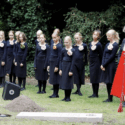
For Mindelunden this has been an unusual case, because the remains of Preben Holger Larsen were believed to have been lost. Preben Holger Larsen’s name is therefore both on the newly made gravesite and on the memorial wall among the names of resistance fighters whose remains had never been found. Because Mindelunden is a memorial for the resistance fighters that died only during the war, surviving resistance fighters have not been granted a gravesite at the time of their death in subsequent decades. Larsen’s remains are the only instance of a resistance member who died during the war to have been identified since the final burials at Mindelunden in 1947. Because Larsen already had a memorial plaque, and therefore an established place in the history of the Danish resistance, the decision was made to offer the family a burial at Mindelunden. On 29 August 2022, Preben Holger Larsen was re-interred in a ceremony at Mindelunden.
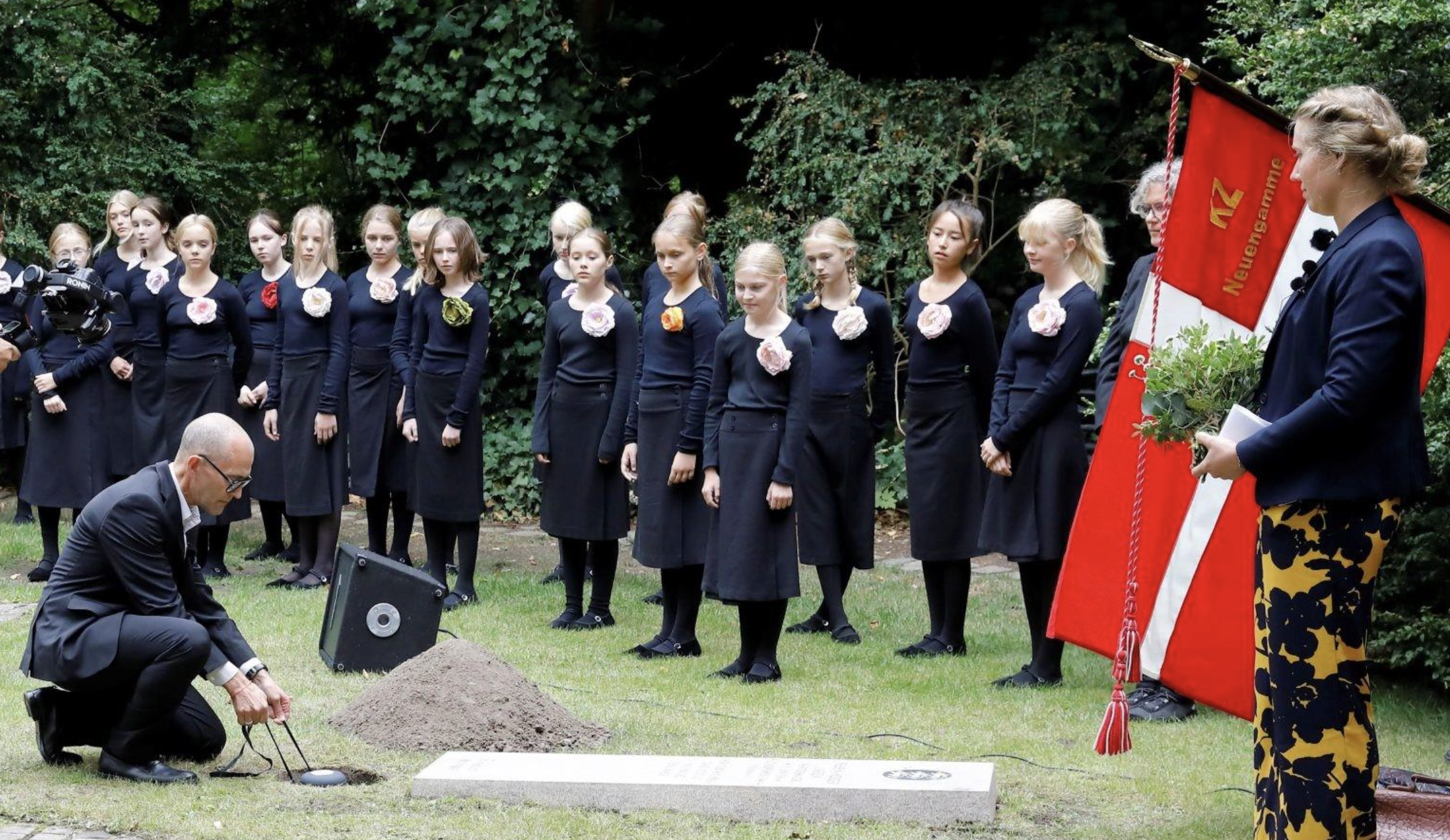
The restoration of Preben Holger Larsen’s urn has sparked significant interest in Denmark. The reburial received extensive coverage on national television, in written media and was featured in a historical podcast (Ankjærgaard, 2022). Following this public attention, the Danish Broadcasting Corporation (DR) covered the interment and produced a small documentary series that aimed to uncover the mystery surrounding the urn, including why it was not returned to Preben Larsen’s family in Denmark in 1945. In 2025, Mindelunden’s historians published a book titled De dødes marker – skæbner fra den danske modstandskamp (The Dead’s Fields – Fates from the Danish Resistance), which discusses new archival materials related to Preben Holger Larsen’s fate. The original urn, too badly damaged to be interred with Larsen’s remains, is now housed at the National Museum of Denmark. Along with the identifying tags found with the remains, it is now part of the Museum’s collection, telling the story of Preben Holger Larsen’s long journey home.
Conclusions
Preben Larsen’s case is highly unusual, as evidenced by being the first person named on both memorials for the missing and the identified at Mindelunden. We hope, however, that he might not be the last. As argued by Seidelman et al (2017) and in the Vienna Protocol, it is likely that Holocaust-era human remains will continue to be found for many years to come, due to the breadth and scale of Nazi atrocities across Europe. Moreover, the significant numbers of twentieth-century human remains in museums, private collections and archaeological settings related to violence and conflict means that discovery of remains which require complex repatriation will continue. Our aim in sharing this account is to provide other organisations with a roadmap for approaching extraordinary repatriations for which there is no clear cultural or religious guidance.
The first point on this roadmap is to note that making collections information publicly available is a vital responsibility of museums. Without publishing the collections record of Preben Larsen’s remains online, there would have been further unknowable delays in identifying and appropriately repatriating his ashes to Denmark. Cataloguing work is never-ending by its nature, as it moves through systems, from paper to database and beyond. Further knowledge and research should always be captured and added to the historical record as it comes to light. Museums and archives must acknowledge that they are publishing records which will forever be unfinished, but that this is the right thing to do in terms of public access and engagement, as well as collections management.
The second point is that the work to enhance and improve records is labour-intensive and takes time. The repatriation of Larsen’s remains was ultimately delayed by the Covid-19 pandemic, but around that, over a year of work by staff at both the Science Museum Group and Wellcome Collection, as well as many external experts, went into unravelling the complexities of the urn, its contents and its documentation. The contradictory nature of the archival and the material culture evidence as to the identity of the remains could easily have led to a non-specific outcome, which would have been culturally or religiously irrelevant to Larsen himself. However, by committing the staff time and resources to a thorough and multi-disciplinary programme of research, Preben Larsen was identified beyond reasonable doubt, and his own family were able to decide on the most appropriate fate for his remains.
The third point is that the complexity of identifying and appropriately treating human remains in museums is an issue which will continue to grow. ‘The twentieth century was the century of mass violence and genocide’ (Anstett and Dreyfus, 2016) and although some work has been done to address the continuing implications of the Second World War and its unmatched scale, it is not the only conflict represented in museum collections. More remains associated with warfare, atrocities and human rights abuses will be found in museum collections, and more complex questions around restoration and repatriation will arise. By their nature, cases where a repatriation request originates with a family or community claiming human remains will be more prominent and more likely to receive institutional attention. However, the responsibility of museums to question, develop and improve their approach to human items in their care should not overlook the remains which are unclaimed.
In short, this case study shows a clear need for an ethical, research-driven review of human remains in museum collections, examining histories of acquisition, collection, management and disposal. Human remains in museum collections are not ‘objects’ in the same way as most artefacts, and require a higher standard of care and understanding, regardless of their origin. It is easy to lose sight of the humanity of human remains in a museum context, where we may be discussing thousands of items and the collections management that they require. But to identify a person, and to return their remains to an appropriate resting place, is perhaps one of the most meaningful things a museum can do. It will not be possible, nor appropriate, for all human remains to be treated in this way. However, it is an important part of collections management practice to invest the intellectual, legal and emotional labour required to identify, wherever possible, the people in our care, and to acknowledge that not all human remains belong in museum collections.
Acknowledgments
The identification and repatriation of Preben Larsen’s remains was a difficult process which took place over several years, complicated further by the Covid-19 pandemic. Many museum professionals and subject experts volunteered their time to help identify Preben Larsen’s remains and facilitate their return to Denmark. The authors would like to thank Nicholas Márquez-Grant, Torsten Jugl, Selina Hurley, Glyn Morgan, Natasha McEnroe, Nicole Simoes da Silva, Matt Walker, Steve Britt, David Chan, Helen Mears, Jenny Haynes, Lone Britt Christensen, and Preben Larsen’s family for their contribution to this process.
Tags
Footnotes
References
Authors
Media in article